Temple · Hindu
Seetha Amman Temple
Sita Devi, with Rama, Lakshmana and Hanuman·Modern temple on a site of much older tradition·Central Province
A Vaishnavite temple at Sita Eliya, traditionally identified as the place where Sita was held captive in the Ramayana.
Dedicated to
Sita Devi, with Rama, Lakshmana and Hanuman
Period
Modern temple on a site of much older tradition
Hours
Daily, morning to evening.
Neighborhood
Sita Eliya
The Seetha Amman Temple — also called the Ashok Vatika Sita Temple — is a Vaishnavite Hindu temple at Sita Eliya, on the road south from Nuwara Eliya towards Hakgala. It is the most visited stop on Sri Lanka's Ramayana trail, and the reason a great many Indian pilgrims come to the hill country at all.
The tradition
In the Ramayana, Sita is abducted by the rakshasa king Ravana and brought to Lanka. She refuses to stay in his palace and is kept instead in the Ashoka Vatika, under a simsapa tree — and it is here that Hanuman finds her and gives her Rama's ring as a sign that rescue is coming. This site is traditionally identified with that garden.
These are devotional identifications rather than archaeological ones, and the temple presents them as such. Read them as living tradition, which is what draws the pilgrims, rather than as history.
What is here
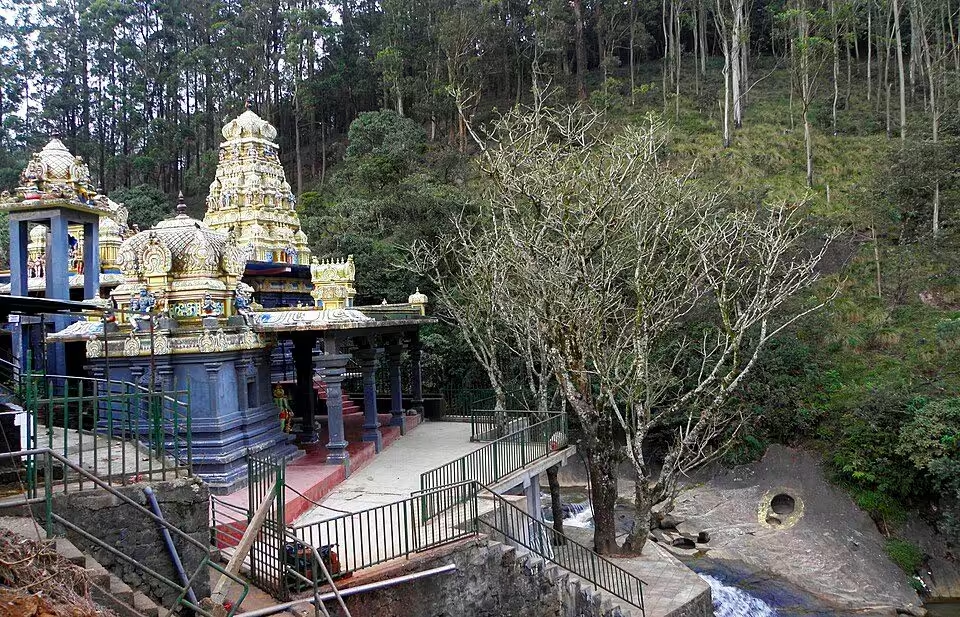
A small, brightly painted temple in a wooded fold of the hills, with a stream running past it that is said to have been made to meet Sita's needs during her captivity, and in which she is believed to have bathed. Circular depressions in the rock beside the water are shown to visitors as Hanuman's footprints.
Hakgala Botanical Garden, founded in 1860, lies about 1.7 km south-east and is itself identified with Ravana's garden. Sita Pokuna, a bare patch on the Hakgala rock above, is pointed out as the place she was held.
Visiting
Shoes off at the entrance. It is an active temple and can be crowded with pilgrim coaches in season; early morning is quietest. At nearly 1,900 metres it is cold in the shade.
Folio II
Iconography & Detail
Buddhika Mawella / Wikimedia Commons / CC BY-SA 3.0
Yercaud-elango / Wikimedia Commons / CC BY-SA 4.0
.avif)
Z thomas / Wikimedia Commons / CC BY-SA 4.0
Folio III
Situation
Coda