Shrine · Syncretic
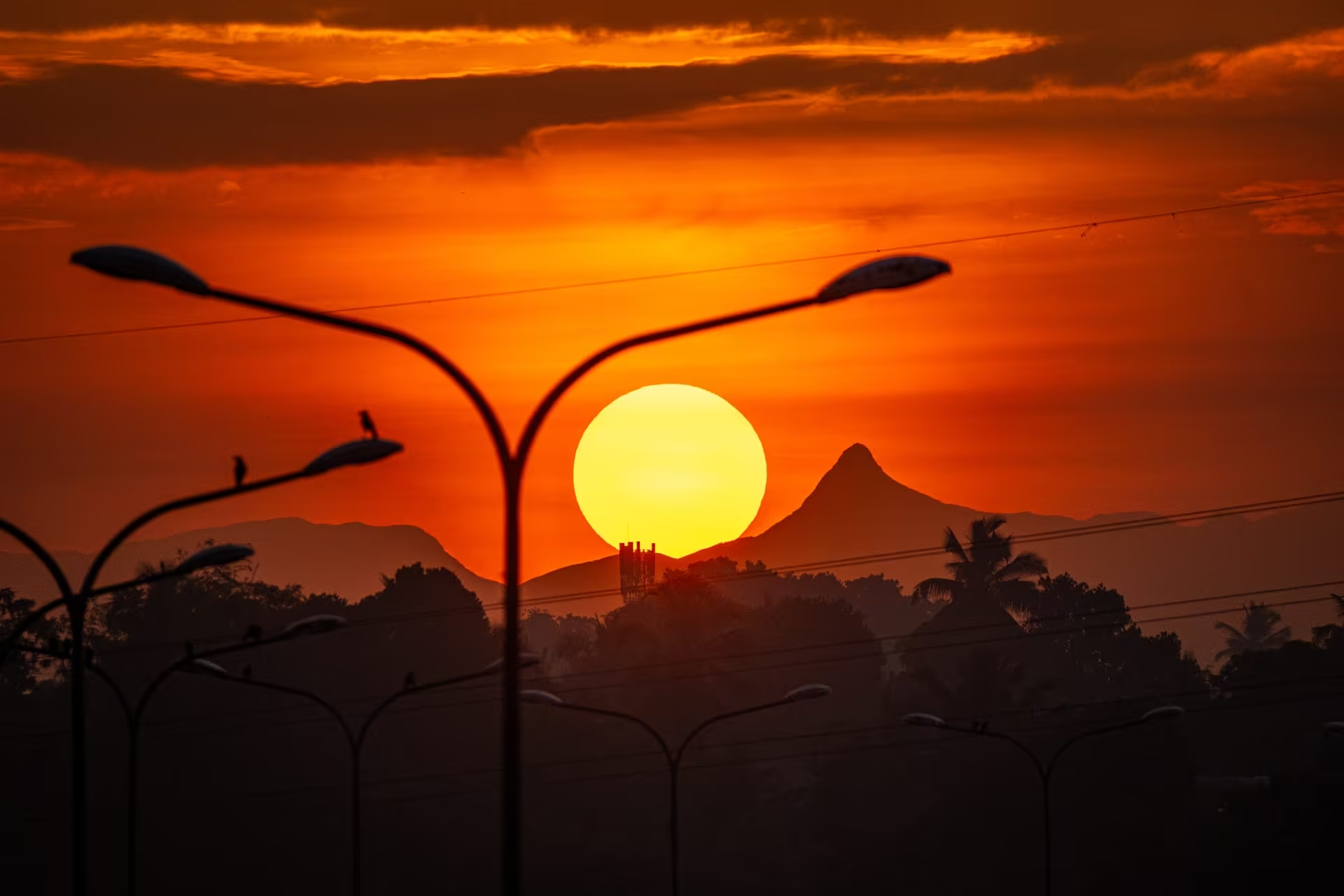
Sri Pada (Adam's Peak)
Sacred footprint revered by multiple faiths·Ancient pilgrimage tradition·Sabaragamuwa Province
A multi-faith pilgrimage mountain where devotees climb through the night to venerate the sacred footprint at sunrise.

Dedicated to
Sacred footprint revered by multiple faiths
Period
Ancient pilgrimage tradition
Hours
Pilgrimage season generally runs from December to May; most visitors climb overnight for sunrise.
Neighborhood
Nallathanniya and Ratnapura routes
Sri Pada — Adam's Peak — is the holy mountain of Sri Lanka, a 2,243-meter pyramid above the tea country crowned by a single rock-cut depression that four religions claim as their own. Buddhists venerate it as the footprint of the Buddha, left at the request of the mountain's guardian god Saman; Hindus as the footprint of Shiva; Muslims and Christians as the first footstep of Adam after his fall from Eden — or, in another tradition, the print of St. Thomas. Whatever the name, the response is the same: people climb it, at night, by the tens of thousands, and have for many centuries.
The season
The pilgrimage season opens on the Unduvap full moon in December and runs to the Vesak full moon in May — see Vesak — when the summit shrine is staffed, the stairways are lit end-to-end, and tea stalls line the route through the dark. January and February bring the biggest crowds and the best weather. Out of season the mountain turns wet, leech-ridden, and cloud-bound, the lights go off, and the climb becomes a serious unsupported hike rather than a shared procession.
The night climb
The classic ascent is the pilgrimage climb from the Hatton side — roughly 5,000-plus steps, climbed between about 2 am and dawn. It is less a hike than a slow-moving river of people: grandmothers climbing barefoot, first-time pilgrims singing devotional songs, the bell at the summit rung once for every ascent a pilgrim has completed. The physical details are on the Sri Pada peak page; the cultural rule is simpler — treat it as a pilgrimage first and a hike second, especially on poya (full moon) nights and weekends, when the final stairways can slow to a standstill.
Sunrise and the shadow
Pilgrims time the climb for ira sevaya — the sunrise watch. On a clear morning the sun lifts out of the eastern plains, and minutes later the mountain throws its own shadow westward: a perfect, impossibly sharp triangle laid across the cloud sea, which seems to detach and hover as the sun rises. It lasts only minutes and is one of the most extraordinary optical sights in South Asia. The summit is cold before dawn — bring warm layers, however absurd that feels in the lowlands.
The butterfly mountain
The peak's older Sinhala name, Samanala Kanda, means butterfly mountain — for the migrating butterflies said to fly toward the peak to die, and for the god Saman whose shrine guards it. The mountain rises from the wet hill country south of the tea district: the moorlands of Horton Plains and the World's End loop lie east, and the walking country of the Pekoe Trail threads the estates between them.
Folio II
Iconography & Detail
Coda
Continue the Pilgrimage
Related
Connected places and entries worth pairing