Duruthu Perahera (Kelaniya)
දුරුතු මහා පෙරහැර
Also known as: Kelani Duruthu Perahera, Kelaniya Perahera, Duruthu Maha Perahera
Kelaniya Raja Maha Vihara's January procession, held at the Duruthu full-moon poya near Colombo to honour the Buddha's visit, with drummers, dancers, torch-bearers and elephants.
Location
Kelaniya Raja Maha Vihara, Kelaniya (near Colombo)
Duration
1 days
Month (AD)
January
Highlights
Night procession of drummers, dancers, fire performers and caparisoned elephants, the relic casket procession, the devale processions of Vishnu, Kataragama and Vibhishana, Solias Mendis temple frescoes.
Tips for Visitors
Dress modestly, preferably in white, and carry shoes you can slip off at the temple. Arrive well before dusk because streets close and crowds build. Alcohol is not sold on poya days, so plan accordingly. Confirm the exact perahera date with the temple, since it is set by the Duruthu poya.
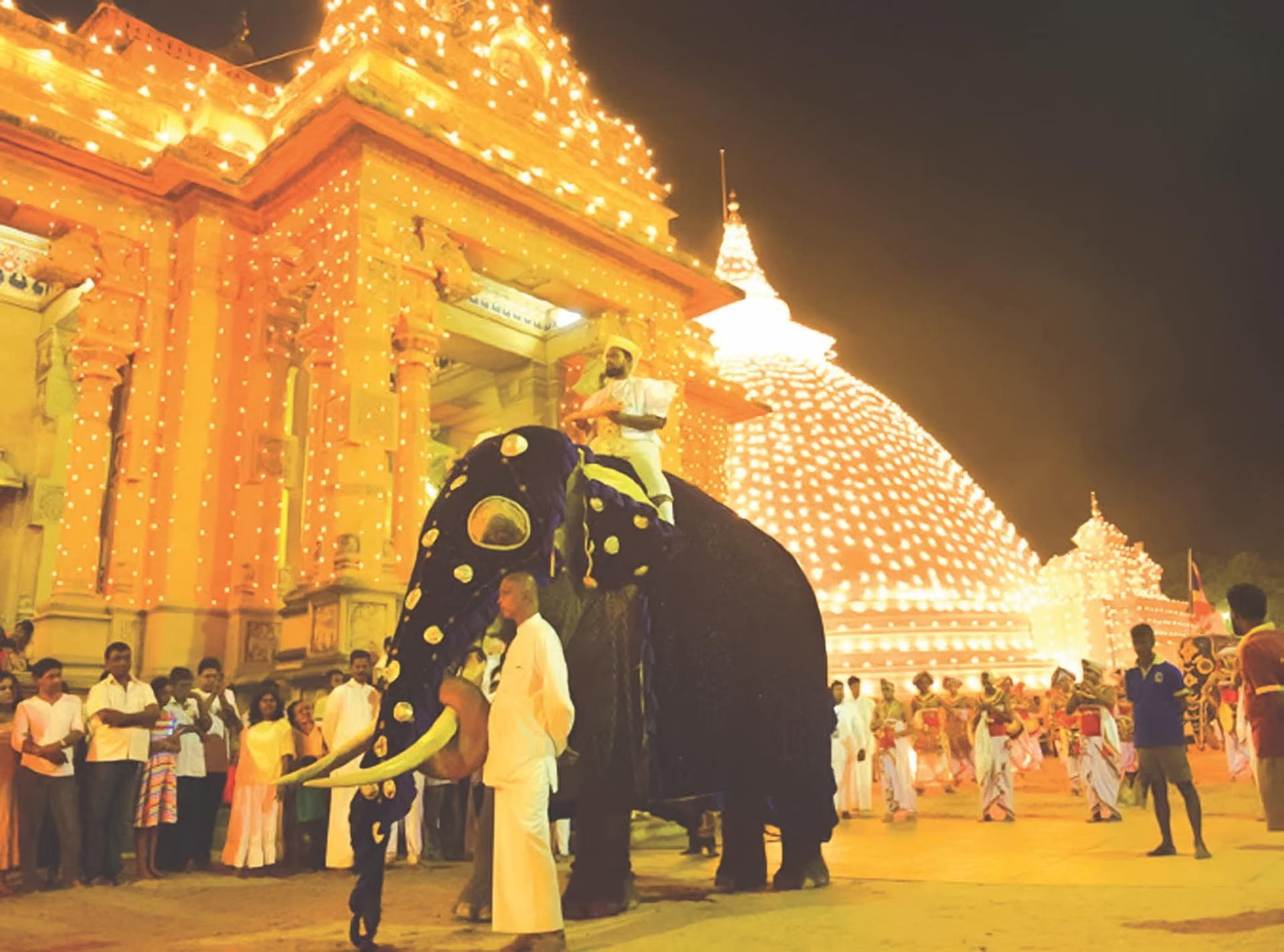
The Duruthu Perahera is the annual festival of the Kelaniya Raja Maha Vihara, a temple on the bank of the Kelani river about seven miles from Colombo and one of Sri Lanka's sixteen most sacred Buddhist sites. Held in January at the time of the Duruthu full-moon poya, it is the grandest procession of the Western Province, with drummers, dancers, torch-bearers, acrobats and elephants taking to the streets around the temple after dark. It is often called the most colourful low-country procession on the island.
Origin and legend
The festival commemorates the third visit of the Buddha to Sri Lanka. According to the chronicles, the Buddha visited Kelaniya eight years after his enlightenment at the invitation of the Naga king Maniakkhika, who offered a gem-studded throne on which the Buddha sat to preach. A stupa was later built over the throne by King Yatalatissa, who reigned in the 3rd century BCE, and Kelaniya has been revered ever since. The stupa is built in the shape of a heap of paddy.
Kelaniya is also tied to the story of King Kelanitissa, who in the 2nd century BCE is said to have executed an arahant in a cauldron of boiling oil. In the legend, the gods, angered by the deed, caused the sea to flood part of the coast, and the king set his daughter Vihara Maha Devi adrift in a boat to appease them. She landed in the south, married King Kavantissa, and became the mother of Dutugemunu, the king who unified the island.
The temple has been destroyed and rebuilt several times: after the invasion of Kalinga Magha in 1213, again after the Portuguese conquest in the 16th century, and rebuilt in 1767 under the Kandyan king Kirti Sri Rajasinha. From 1888 the philanthropist Helena Wijewardena commissioned the artist Solias Mendis to repaint the shrine, and his frescoes of the Buddha's life are still one of the temple's glories.
The modern perahera
The procession itself is much younger than the temple. The Kelani Duruthu Perahera was inaugurated in 1927 by Don Walter Wijewardena, son of Helena. At first it had two parts: the Dhatu Perahera, in homage to the Buddha's relics, and the perahera of the god Vibhishana, the patron deity of Kelaniya. A Vishnu perahera was added in 1930 and a Kataragama (Skanda) perahera in 1954. Today the Dhatu Perahera leads, followed by the devale processions of Vishnu, Kataragama and Vibhishana, in that order, with Vibhishana as host god giving way to the other two.
What happens
The perahera is the climax of a religious festival held each year at the temple, and is held on the pre-full-moon poya day.
- The procession. Whip-crackers and fire dancers open the way, followed by drummers, torch-bearers and dancers in costume, flag bearers, and caparisoned elephants. The horanewa (double-reed oboe) and drums carry through the night.
- The relics. The Dhatu Perahera, in homage to the Buddha's relics, always leads.
- Devale processions. Behind come the processions of the three gods, each with its own dancers, drummers and elephants.
Where and how to watch
Kelaniya is a short trip from central Colombo, and crowds from across the country head there on perahera night. Arrive well before dark, expect traffic restrictions around the temple, and plan your return trip.
Visitors should wear modest, preferably white clothing, remove shoes and hats at the temple, and respect the poya observances: alcohol is not sold on poya days.
Related
Connected places and entries worth pairing