Nallur Festival
நல்லூர் திருவிழா
Also known as: Nallur Kandaswamy Kovil Festival, Nallur Mahotsavam, Nallur Murugan Festival, Nallur Thiruvizha
Jaffna's 25-day festival at Nallur Kandaswamy Kovil, Sri Lanka's biggest Hindu festival, culminating in the chariot festival and the water-cutting ceremony.
Location
Nallur Kandaswamy Kovil, Jaffna
Duration
25 days
Month (AD)
August/September
Highlights
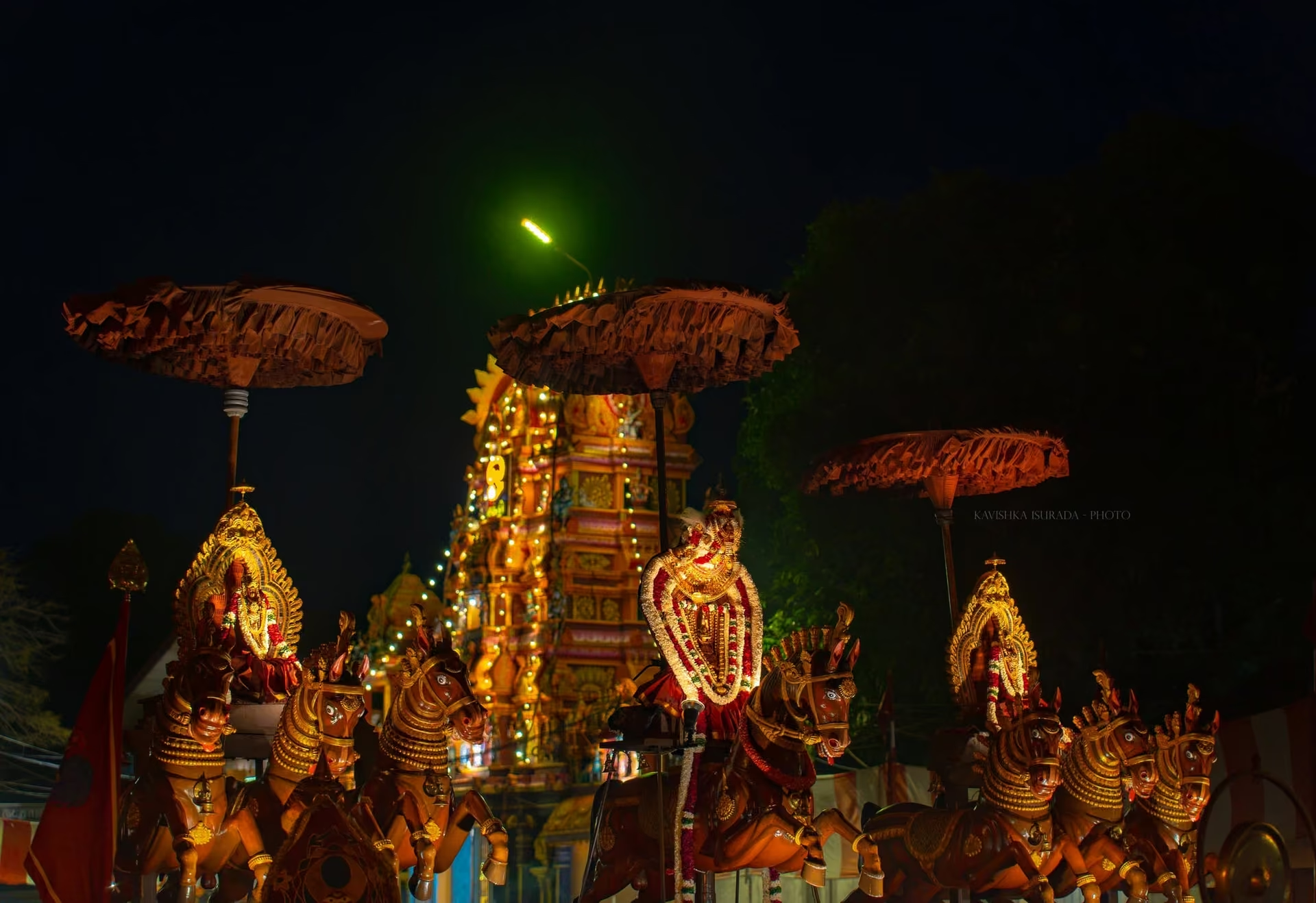
Flag hoisting, daily deity processions on festival vehicles, the golden Vel Vimanam, Ther chariot festival, Theertham water-cutting, the Vel and the temple's gopurams and bell towers.
Tips for Visitors
Book accommodation in Jaffna early. Arrive at the temple early on the chariot day and expect barriers and crowds around Nallur. Men should be ready to remove their shirts for the inner sanctum, and all visitors should dress modestly in light clothing, remove footwear and follow temple volunteers' instructions. The programme is set by the temple each year: check the Devasthanam's announcements for exact dates.
The Nallur Festival, the annual Mahotsavam of the Nallur Kandaswamy Kovil in Jaffna, is the great festival of Sri Lanka's Tamil Hindus and is widely described as the island's largest Hindu festival. For twenty-five days every August the temple of Murugan (Skanda) draws tens of thousands of devotees from the north, the east and the diaspora, with daily processions of the deity, drumming and nadaswaram music, and a chariot festival that fills the streets around the temple.
History of the temple
The temple's history is told in layers. Tradition says the first temple at Nallur was built in 948 CE. The third temple was built in the 15th century by Sembaha Perumal, the general and adopted son of the Kotte king (Bhuvanekabahu), who made Nallur his capital in about 1450. It was destroyed by the Portuguese in the 1620s. The present temple was built in 1734, during the Dutch period, by Raghunatha Mappana Mudaliyar, who is recorded as consecrating a Vel (the divine spear) at the site. That Vel is still the focus of the sanctum. The temple's trusteeship has remained with the descendants of Mappana Mudaliyar, and the annual festival was instituted in the time of Raghunatha Mappanar III.
Today the temple has three gopurams and six bell towers inside fortified walls, which gives it the look of a citadel in the middle of Nallur.
The twenty-five days
The festival begins with the kodiyetram, the hoisting of the sacred flag, on the sixth day after Adi Amavasai (the new moon of the Tamil month of Aadi), and lasts twenty-five days. Each day has morning and evening rites in which the deity is carried round the inner and outer streets on a different vehicle. Highlights include:
- Kodiyetram (day 1): the flag-hoisting that opens the festival.
- Manjam (around day 10): the deity is carried on a decorated throne-like platform.
- Kailasa Vahanam, Vel Vimanam and Thandayuthapani Utsavam (around days 20–22): processions on special vehicles, including the golden Vel Vimanam.
- Sapparam (day 23): the decorated festival car in the evening.
- Ther (day 24): the chariot festival, the peak of the festival, when the deity is drawn through the streets on the great wooden chariot, early in the morning.
- Theertham (day 25): the water-cutting festival, followed the same evening by the lowering of the flag.
- Thirukalyanam and Poongavanam: the holy wedding of the deity, and the closing ceremonies.
In 2026, the festival begins on 16 August with the Vairavar rite, the flag is hoisted on 17 August, the chariot festival is held on 9 September and the water-cutting on 10 September.
Where and how to watch
The temple is on Kovil Road in Nallur, about 1.5 km from Jaffna town. Jaffna can be reached by road and rail from Colombo, and the town fills up in the festival weeks, so book well ahead. The chariot festival begins early in the morning, and barriers are set up around the temple during the festival.
Nallur is a living temple. Men are expected to remove their shirts to enter the inner sanctum, and everyone should dress modestly, remove footwear, and follow the instructions of temple volunteers.
Related
Connected places and entries worth pairing
